
Last Updated: October 2023
Reviewed By: Cybersecurity Research Team
Topic: Dark Web Financial Safety & Risk Assessment
Executive Summary
Financial losses on anonymized networks are frequently linked to users bypassing the protection of a neutral third party. Dark web escrow serves as a primary financial buffer against theft, yet the underlying mechanics are often misunderstood by participants.
While no system offers absolute safety, understanding the risks associated with different types of fund-holding mechanisms is essential for asset protection. This analysis explores how digital safeguards function, how to identify structural vulnerabilities in marketplaces, and how to recognize a trap before committing funds.
Quick Answer: What is Dark Web Escrow?
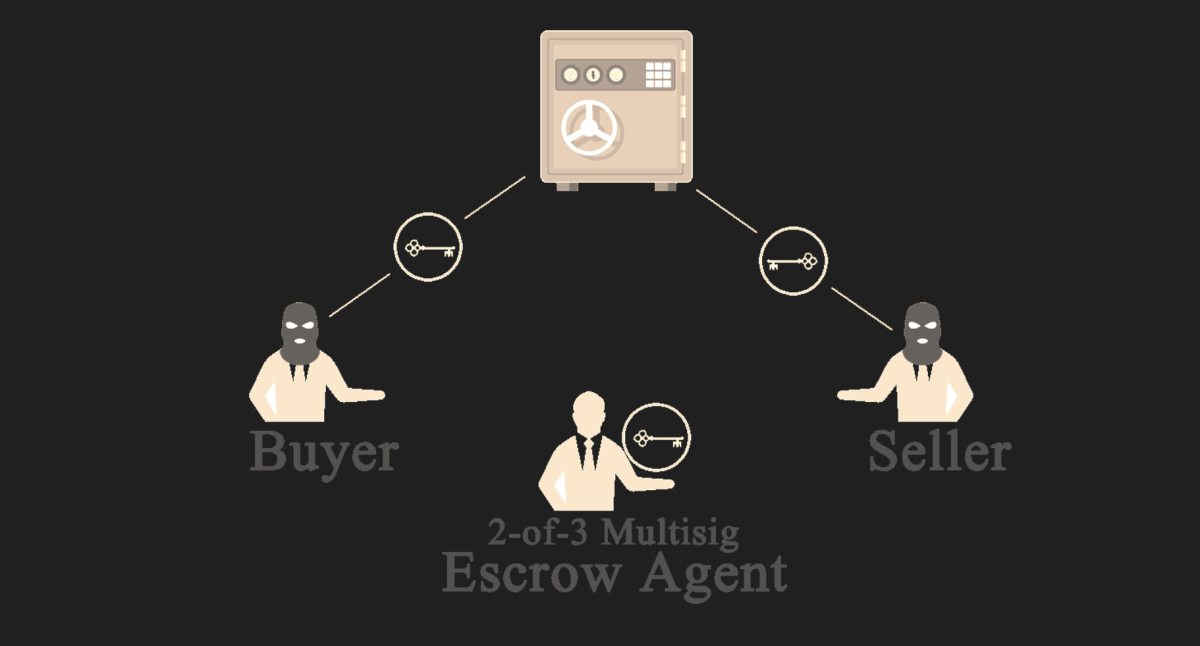
Dark web escrow is a conditional financial arrangement where a third-party service (typically a marketplace protocol) retains a buyer's payment until the seller delivers goods. Funds are only released to the vendor upon confirmation of delivery or returned to the buyer if a dispute is resolved in their favor. In some advanced implementations, 2-of-3 Multisig architecture is utilized to ensure that no single actor—including the market administrator—can unilaterally move funds.
1. Understanding the Mechanism
At its core, these holding systems act as a cryptographic state of suspension. When a transaction is initiated, the buyer does not send coins directly to the vendor. Instead, funds are directed to an address controlled by the platform's script or wallet.
This system addresses the lack of trust in underground commerce: the buyer fears sending money without receiving goods, while the seller fears delivering without payment. The intermediary provider acts as a blind arbitrator. If a dispute arises, the platform analyzes evidence to determine the recipient of the funds.
2. Escrow vs. No Escrow: Comparative Safety
Understanding the distinction between these transaction types is vital for assessing risk exposure.
| Feature | Escrow Protected | No Escrow (Direct Deal) |
|---|---|---|
| Fund Control | Held by a neutral contract during the transaction. | Sent directly to the seller's wallet immediately. |
| Safety Level | Moderate (varies by market reputation). | Extremely Low. |
| Risk Factor | Marketplace insolvency or biased dispute resolution. | Vendor vanishes immediately; zero recourse. |
| Recommendation | Commonly used practice for established transactions. | Avoid entirely, regardless of discounts offered. |
Verdict: Transactions without a holding mechanism are functionally equivalent to donating money. Even with a trusted vendor, technical errors can result in permanent loss without an intermediary.
3. Identifying Fake Escrow Systems
Scammers frequently set up false marketplaces or independent "holding services" designed solely to intercept deposits. Unlike legitimate platforms that facilitate dark web payment methods, these sites often act as black holes for crypto.
Red Flags include:
- New Domains: Sites with little to no community history or uptime.
- Guaranteed Returns: Any service promising "100% insured" transactions without verifiable underwriting.
- Broken OpSec: Missing PGP verification keys, unencrypted login pages, or poor SSL implementation.
- Unrealistic Fees: Services charging exorbitant fees (well above the standard 2-5%) without clear justification.
4. Bitcoin vs. Monero: Auditability and Privacy Trade-offs
The choice of cryptocurrency impacts the transparency and safety of the protection process.
- Bitcoin (BTC): The transparent nature of the blockchain allows users to verify that a market actually holds the funds it claims to hold. This transparency allows for "proof of solvency," though it lacks privacy.
- Monero (XMR): While XMR offers superior privacy, it obscures the audit trail. Users face significant challenges in independently verifying if a market is solvent. However, Monero does support "View Keys," which allow users to selectively verify incoming funds without revealing their full transaction history. In 2026, Monero remains common for privacy-focused transactions, but it requires a higher degree of trust in the market's integrity because full public "proof of reserves" is technically difficult to provide without breaking privacy.
Risk Note: If a market claims to hold Bitcoin reserves but the public blockchain shows empty wallets, the platform is likely insolvent or fraudulent.
5. The Shift to Multisig Structures
Historically, marketplace admins held total control over the escrow wallet (single-key access). This created a central point of failure; if the admin turned malicious, they could drain every wallet instantly—a tactic commonly known as an Exit Scam.
To mitigate this, some security-conscious platforms have adopted Multisig (Multi-Signature) technology. This approach relies on principles similar to NIST Digital Signature Standards (DSS), distributing trust to prevent a single point of failure.
How 2-of-3 Multisig Can Reduce Risk
This architecture distributes trust across three parties: the Buyer, the Seller, and the Market.
- Successful Trade: The buyer and seller sign off on the transaction. The market is not required to move the funds.
- Dispute Resolution: If the vendor disappears, the buyer and market admin can collaborate to sign a refund transaction.
- Theft Prevention: The market admin cannot steal the funds alone because they possess only one of the three required keys.
This structure can significantly lower the risk of catastrophic marketplace collapses, as the administrator never has absolute control over user funds.
6. How Marketplace Collapses Operate
Despite these protections, platform insolvency remains a prevalent threat. According to blockchain analysis reports (such as those published by Chainalysis), these events typically occur in two phases:
- The Accumulation Phase: The market operates legitimately, building trust and volume. Over time, the holding wallets grow to massive sums.
- The Lockout: Suddenly, the site goes offline for "maintenance." Withdrawals are paused. The administrators then move the funds from the holding wallets to their own private wallets and disappear.
Why Multisig matters: In a multi-signature environment, an admin cannot execute phase 2 unilaterally. They would need the cryptographic cooperation of the other parties, which acts as a deterrent against theft.
7. Common Pitfalls in Fund Holding Usage
Even with robust systems, user behavior is often the weakest link.
- Finalizing Early (FE): Vendors may ask buyers to release funds before shipping to "build reputation." This bypasses all protection.
- Fix: Never finalize early. Use markets that enforce mandatory holding periods.
- Ignoring Timers: Escrow is time-limited. If the timer expires, funds may auto-release to the vendor.
- Fix: Monitor order status and initiate a dispute before the timer reaches zero.
- Direct Deals (Off-Platform): Vendors offering discounts for direct payments via Telegram or Wickr.
- Fix: Always transact through the market's interface to keep funds in the holding state.
- Phishing Links: Users depositing funds into a clone site mimicking a legitimate market.
- Fix: Verify the onion URL using trusted directories like OnionLinks and cross-check PGP keys.
8. Safety & Best Practices
These intermediaries protect capital, but they do not guarantee identity protection or device security.
- PGP Verification: Always verify the PGP signature of the marketplace. This ensures you are interacting with the legitimate service and not a man-in-the-middle attacker.
- Operational Security (OpSec): Use a dedicated OS and avoid reusing addresses.
- Diversification: Do not keep all funds in a single marketplace wallet. Only deposit what you intend to spend immediately.
FAQ
Is escrow on anonymous networks 100% safe? No. While it prevents direct vendor fraud, it cannot stop a marketplace collapse unless a 2-of-3 Multisig system is strictly enforced.
What happens if a vendor sends a counterfeit item? You must initiate a dispute through the platform's interface. The market admin acts as an arbitrator. If you can provide evidence, the funds may be returned to you.
Does the holding process work with Monero? Yes, most modern platforms support XMR. The process is identical, though the privacy features prevent users from auditing the market's external reserves fully without view keys.
Can I recover funds if I release them early? Generally, no. Releasing funds (finalizing) transfers custody to the vendor's private wallet. The platform loses all technical control over the coins at that point.
Conclusion
Dark web escrow is a necessary financial tool designed to substitute for traditional legal protection in high-risk environments. By understanding the limitations of centralized holding and the enhanced security of multisig structures, users can better assess their risk exposure. However, the strongest system cannot compensate for poor OpSec. Staying safe requires a combination of cryptographic vigilance, refusal to bypass protective measures, and the use of verified marketplace directories.
References & Authority Sources
- NIST Special Publication 800-57: Recommendations for Key Management (Part 3) – regarding Multi-Signature Cryptographic Standards.
- Chainalysis Crypto Crime Reports: Annual analysis of darknet market volume, exit scams, and illicit transaction trends.
- Financial Cryptography and Data Security (FCDS): Academic research on trustless protocols and decentralized escrow mechanisms.