
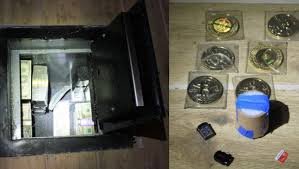
In the early hours of November 2014, the dark web experienced its most seismic shockwave. A coalition of international law enforcement agencies—spearheaded by the FBI and Europol—executed Operation Onymous, a sweeping, coordinated digital sting that shattered the illusion of invincibility surrounding Tor hidden services.
Over 400 dark web URLs were seized in a single, devastating blow. At least 17 countries participated in the simultaneous raids, resulting in arrests and the definitive shuttering of the internet's most notorious black bazaars. For the users of these networks, waking up to the dreaded "This Hidden Service Has Been Seized" banner was a chilling wake-up call.
But a decade later, as we analyze the landscape of the dark web in 2026, the echoes of Operation Onymous still reverberate. How did law enforcement crack the uncrackable? And did this historic bust actually stop the trade, or merely force it to mutate into something far more resilient?
The Full List of Dark Web Markets Seized & Shut Down
In the criminal complaint filed in the Southern District of New York, the FBI listed all confirmed seized sites, separating them into distinct categories based on their primary illicit offerings. Below is the complete historical record of the markets taken down during the Operation Onymous sweep.
💊 Drugs & Illicit Substances
These markets primarily focused on the sale of narcotics, operating under the same libertarian-grey-market ethos as the original Silk Road. Silk Road 2.0 was the undisputed flagship of this category.
| Market Name | Primary Focus | Notes |
|---|---|---|
| Silk Road 2.0 | General Narcotics | The successor to the original SR; operated by Blake Benthall ("Defcon") |
| Blue Sky | Narcotics / MDMA | Notorious for high-quality ecstasy and party drugs |
| CannabisUK | Marijuana | Geographically targeted at the United Kingdom |
| Cloud Nine | General Illicit Substances | Smaller vendor-oriented marketplace |
| Dedope | Cannabis / Hashish | Niche market for marijuana products |
| Hydra | Narcotics | Note: Unrelated to the later Russian mega-market of the same name |
| Pablo Escobar Drugstore | Cocaine / Hard Drugs | Themed market focusing on stimulants |
| Pandora | General Narcotics | Popular multi-vendor drug market |
| Smokeables | Cannabis | Specifically focused on smokable products |
| The Green Machine | Marijuana | Another niche cannabis-specific marketplace |
💳 Finance, Counterfeits & Stolen Data
These bazaars were the underbelly of financial fraud, specializing in stolen credentials, counterfeit currency, and money laundering services.
| Market Name | Primary Focus | Notes |
|---|---|---|
| Fake Real Plastic | Counterfeit Credit Cards | Specialized in cloned credit cards |
| Fast Cash! | Money Laundering / Fraud | Facilitated quick illicit financial transfers |
| Pay Pal Center | Stolen PayPal Accounts | Trafficked in compromised payment accounts |
| Real Cards | Counterfeit Debit/Credit Cards | Competitor to Fake Real Plastic |
| Sol’s Unified USD Counterfeit’s | Fake US Currency | High-volume counterfeit bills |
| Super Note Counter | High-Quality Counterfeits | Alleged supplier of "supernote" quality fakes |
🆔 Fake IDs & General Black Markets
A mix of identity fraud services and multi-category black markets that sold a bit of everything from fraud to forgeries.
| Market Name | Primary Focus | Notes |
|---|---|---|
| FakeID | Counterfeit Identification | Driver's licenses and passports |
| Alpaca | General Black Market | Mixed inventory |
| Black Market | Broad Illicit Marketplace | Unspecialized underground bazaar |
| Bungee 54 | General Black Market | Mixed inventory |
| Farmer1 | Unconfirmed | Likely agriculture/narcotics related |
| Flugsvamp | Swedish-Language Narcotics | Regional market catering to Scandinavia |
| Golden Nugget | General Illicit Goods | Mixed inventory |
| Tor Bazaar | General Black Market | Unspecialized underground bazaar |
| Topix | General Illicit Goods | Mixed inventory |
| The Hidden Market | Broad Underground Market | Mixed inventory |
| Zero Squad | General Black Market | Mixed inventory |
The Billion-Dollar Question: How Did Law Enforcement Crack Tor?
Perhaps the most terrifying aspect of Operation Onymous for dark web users was the sheer scope. If the FBI could take down 400 sites at once, had they broken the fundamental cryptography of the Tor network?
At the time, the Tor Project was just as in the dark as the users. When asked if they knew how the breaches occurred, a Tor spokesperson told reporters: “We have no information. Any thoughts are merely speculation.”
However, as years passed, security researchers and leaked court documents revealed the truth: Law enforcement didn't "crack" Tor. They cracked the humans and the software running on top of it.
To understand how this happened, you must understand what Tor is and how it works. Tor is designed to route your traffic through encrypted layers. But if the server hosting the website (the .onion service) leaks its real, clearnet IP address, the encryption is bypassed entirely.
Here is how Operation Onymous actually succeeded:
- Server Misconfigurations: Many market admins were sloppy. They hosted their dark web servers on commercial clearnet hosting providers (like DigitalOcean or AWS). A simple server error or misconfigured firewall allowed law enforcement to ping the server and retrieve its true IP address.
- Exploiting Web Software Vulnerabilities: The dark web is built on standard web technologies (like Nginx, PHP, and Apache). In 2014, critical vulnerabilities like "Heartbleed" and "Shellshock" were rampant. Law enforcement used these exploits to force the server to reveal its location.
- Bitcoin Forensics: In 2014, Bitcoin was widely considered anonymous. It isn't. Law enforcement traced blockchain transactions from market escrow wallets to clearnet exchanges (like Mt. Gox or Bitstamp) where the market operators had verified their real identities to cash out.
- Classic Police Work: The arrest of Silk Road 2.0 operator Blake Benthall was largely due to terrible OPSEC. He used his personal, clearnet email address to recruit server administrators.
The Hydra Effect: Then vs. Now (2014 vs. 2026)
Operation Onymous was a massive public relations victory for law enforcement, but it ultimately acted as a violent catalyst for the dark web's evolution. If you compare the top 3 active Tor markets in 2026 to the markets of 2014, the landscape is almost unrecognizable.
The purge taught darknet vendors and admins a harsh lesson: relying on Tor alone is not enough. The markets that survived and evolved implemented military-grade OPSEC.
| Feature | 2014 Markets (The Onymous Era) | 2026 Markets (The Modern Era) |
|---|---|---|
| Market Architecture | Centralized (Single server, single point of failure) | Decentralized / Mirrored / DNM Protocols |
| Payment Currency | Bitcoin (Publicly traceable blockchain) | Monero (XMR) / Privacy Coins (Untraceable by default) |
| Security Model | Basic Tor encryption, plaintext comms | End-to-end PGP encryption, 2FA, rigorous vendor vetting |
| Admin OPSEC | Sloppy (Clearnet emails, reused handles) | Extreme isolation (Air-gapped machines, Tails OS, burners) |
| Law Enforcement Risk | Extremely high vulnerability to server seizures | Resilient to takedowns, automated dead-man switches |
Why Operation Onymous Still Matters in 2026
The cat-and-mouse game between law enforcement and the dark web continues to intensify. Analyzing darknet desires and trends in 2026 reveals that user demand for illicit goods remains high, but the methods of accessing them have become exponentially more sophisticated.
Operation Onymous proved a crucial dichotomy: No market is too big to fall, but the ecosystem itself is almost impossible to kill.
When Silk Road 2.0 fell, it created a vacuum. Dozens of smaller, more secure niche markets emerged to fill it. When those fell (like AlphaBay in 2017), the cycle repeated. Today, instead of massive monolithic markets, the dark web is fragmented into highly secure, often invite-only communities that are much harder for agencies to infiltrate.
For those navigating this space today—whether for cybersecurity research, privacy advocacy, or threat intelligence—relying on outdated directories is a fatal flaw. Verified and continuously updated sources, like onionlinks.live, are absolutely essential to avoid the phishing sites, exit scams, and law enforcement honeypots that replaced the seized URLs of the past.
FAQ: Operation Onymous & Dark Web Safety
What was Operation Onymous? Operation Onymous was a joint international law enforcement operation in November 2014 that resulted in the seizure of over 400 dark web URLs and the arrest of major black market operators, including the admin of Silk Road 2.0.
Did the FBI break Tor during Operation Onymous? No. Law enforcement did not break the Tor encryption protocol. Instead, they exploited poor operational security (OPSEC) by market admins, misconfigured servers, outdated web software, and traceable Bitcoin transactions.
Is Silk Road 2.0 still active? Absolutely not. It was seized during Operation Onymous, and its alleged operator, Blake Benthall, was arrested. Any site claiming to be Silk Road today is a scam designed to steal your cryptocurrency.
Are darknet markets still active in 2026? Yes. While massive centralized markets are rarer, the ecosystem has fragmented into smaller, highly secure, and often decentralized marketplaces that use privacy coins like Monero to evade blockchain forensics.
Could an Operation Onymous happen again today? While law enforcement continues to conduct takedowns (like Operation SpecTor), a single sweep of 400 sites is unlikely today. Modern markets use decentralized hosting, automated fail-safes, and superior cryptography, making mass seizures much more difficult.
How can I navigate the dark web safely today? Safety requires rigorous OPSEC: using the Tor Browser correctly, never reusing usernames, using PGP encryption for all communications, and only using verified directories like onionlinks.live to find active, uncompromised links.
Disclaimer: This article is for historical and educational purposes only. Engaging in illegal activities on the dark web carries severe legal and personal safety risks.