


Introduction
Most people who try the dark web for the first time never find anything useful—and many end up on fake or dangerous sites within minutes.
If you’re dealing with the frustration of trying to find legitimate websites on the Tor network, this is a common issue. It usually happens because the dark web lacks a centralized indexing system like Google.
Without the right tools, navigating hidden services feels like wandering through a maze blindfolded. You constantly hit dead ends or stumble into unsafe digital neighborhoods.
Many users search for a not evil search engine onion link that is working in 2026, but finding a safe and updated version requires careful verification. In this guide, you’ll learn exactly how to use the Not Evil search engine on the Tor Browser, how to fix issues when it's down, and how to stay completely safe.
What is Not Evil Search Engine? Not Evil Search Engine is a Tor-based search engine that indexes .onion websites, allowing users to find hidden services that are not accessible through traditional search engines.
How to Use Not Evil Search Engine (Quick Steps)
- Download and install the Tor Browser
- Connect to the Tor network
- Find a working Not Evil search engine onion link
- Paste the link into the address bar
- Search and verify results before clicking
What is Not Evil Search Engine?
Not Evil is a Tor-based search engine designed specifically to index .onion websites. These are hidden services that cannot be accessed through standard clearnet browsers like Google Chrome, Safari, or Edge.
The name "Not Evil" is a direct reference to Google's former corporate motto, "Don't be evil." The creators built the platform with a strong philosophy surrounding privacy, free speech, and anti-censorship.
Unlike Google Chrome, which tracks your IP address and logs your queries, the not evil tor search engine does not track its users. Your traffic is bounced through multiple encrypted nodes via the Tor Browser. This makes it nearly impossible for anyone to trace a search back to your physical location.
Standard search engines use automated "crawlers" to index public IP addresses. Because .onion sites do not have public IP addresses, Google cannot find them. Not Evil solves this by providing a searchable database of manually submitted hidden services so Tor users have a starting point.
To be technically accurate about the space you are entering: The deep web refers to password-protected content (like your online banking), while the dark web includes intentionally hidden sites accessible only through tools like the Tor Browser.
How to Use Not Evil Search Engine (Step-by-Step)
If you're new to this space, it's important to first understand how the Tor network works and how to access .onion sites safely before using any dark web search engine. Once you understand the basics, follow this strict procedure to find hidden services without compromising your privacy.
Step 1: Download and Install the Tor Browser
Start by downloading the official Tor Browser. You cannot use Google Chrome, Firefox, or Edge to access a dark web search engine. Go to the official Tor Project website (torproject.org) and download the correct version for your operating system.
Never download Tor from a third-party site. Malicious actors frequently create fake Tor downloads packed with keyloggers. Once downloaded, run the installer. The Tor Browser is entirely portable. You can run it off a secure USB drive to leave no trace on your host computer.
Step 2: Connect to the Tor Network Securely
Open the Tor Browser. You will see a connection window. For most beginners, clicking "Connect" is sufficient. The browser will automatically establish an encrypted circuit through multiple global nodes.
If you live in a country with heavy internet censorship (like China or Iran), you may need to select "Use a Bridge" to bypass ISP blocks. Once the browser connects, your traffic is securely routed.
Step 3: Locate the Correct URL and Search
Paste the verified .onion link directly into the Tor Browser's address bar and press Enter. The page will take a few seconds longer to load than a standard site because your traffic is bouncing globally.
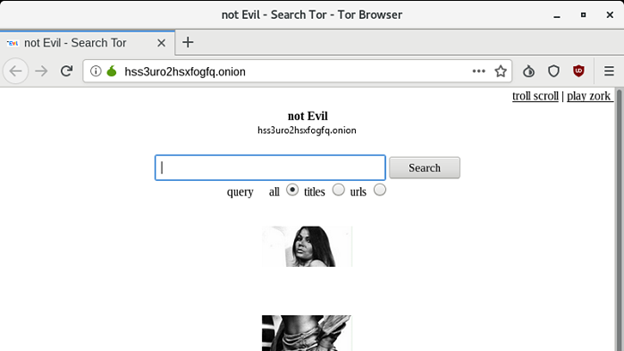
You will be greeted by a very simple, minimalist interface. There are no flashy graphics or targeted ads. There is simply a search bar in the center of the screen. Type your query into the search bar and hit enter. Read the snippets carefully before clicking.
Step 4: Verify the Destination URL
When you find a result, hover your mouse over the link without clicking. Look at the bottom left corner of your Tor Browser to see the destination URL.
Compare this URL to the title of the search result. If the title says "Secure Email" but the URL is a completely unrelated random string, do not click it.
Make sure you follow each step carefully. Skipping one can compromise your digital safety.
Not Evil Search Engine Onion Link (Working 2026)
Because .onion URLs are random 16-character strings, they change frequently. Sites go offline, get hacked, or migrate to new servers, resulting in a completely new URL.
The not evil search engine onion link changes frequently due to downtime, DDoS attacks, or migrations—so always verify you are using a working and trusted version before accessing the site.
Finding a not evil search engine working today requires relying on trusted directories rather than random forum posts. You can use a verified dark web directory to learn how to access .onion sites safely and find the active link. This ensures you avoid phishing clones that mimic the real search engine to steal your data.
Not Evil Search Engine Tor Link (What You Need to Know)
A common point of confusion for beginners is the difference between the browser and the link.
The Tor Browser is the software you use to access the dark web. The Not Evil search engine tor link is the specific .onion URL you type into that browser.
You cannot access the Not Evil link using a standard browser like Google Chrome. Conversely, simply having the Tor Browser does not give you access to Not Evil—you must have the exact, current .onion URL to reach the site.
Is Not Evil Search Engine Safe?
Yes, the tool itself is safe to use. It does not inject malware or track your IP address.
However, the results it provides are not safe. Because it is an unfiltered dark web search engine, the links you click can lead to phishing sites, scams, or illegal content.
The search engine is just a directory. Your safety depends entirely on your behavior after you click a search result. For a deeper understanding of these risks, read our Tor Browser security guide for beginners.
Not Evil Search Engine Not Working? (Fix Guide)
If you cannot access the site, you are not alone. Users frequently search for "not evil not working" or "not evil search engine down."
This happens for three reasons:
- DDoS Attacks: Dark web servers are constantly targeted by attacks designed to take them offline.
- Fix: Wait a few hours and try again.
- Link Rot: The URL you are using is outdated because the site migrated.
- Fix: Find the updated link on a trusted directory.
- Tor Network Congestion: Your connection is timing out before reaching the server.
- Fix: Click the padlock icon in your browser and select "New Circuit for this Site."
Best Not Evil Search Engine Alternatives (2026)
If the not evil search engine is down or not working, these alternatives can help you continue searching the dark web safely. When looking for the best dark web search engines, consider these options:
| Search Engine | Filtering | Index Size | Best For |
|---|---|---|---|
| Not Evil | No filtering | Medium | Raw dark web search |
| Ahmia | High filtering | Medium | Safer browsing |
| Torch | No filtering | Large | Broad indexing (many dead links) |
| Haystak | Moderate | Very large | Advanced users |
If you want a highly curated, safer browsing experience, Ahmia is the best alternative. If you want a massive index, Haystak is a solid choice.
Why Most People Fail Using Not Evil
Most users fail not because the search engine is broken—but because they trust results too quickly.
The dark web rewards caution, not speed. Beginners often click the first result they see, assuming it is legitimate, only to land on a cloned site designed to steal their cryptocurrency or personal information. Patience and URL verification are your only defenses here.
Pro Tips
- A simple way to improve results is to use specific, niche keywords rather than broad terms.
- Avoid using Not Evil as your sole source of truth. Keep Ahmia and Haystak bookmarked as backups.
- Always bookmark the direct .onion URLs of sites you actually like. Relying on the search engine to remember the site is risky.
- Use quotation marks around search phrases to force the engine to find exact matches, filtering out junk results.
Safety / Best Practices
Be careful when clicking on search results. The dark web is entirely unregulated and full of sophisticated phishing attempts.
It’s always better to rely on the "Safest" security setting in the Tor Browser. Click the shield icon next to the address bar and drag the slider to the top.
This setting disables JavaScript. Hackers use JavaScript to execute malicious scripts and expose your real IP address.
Furthermore, never download files directly from a Not Evil search result. Executable files (.exe) and documents (.pdf) found on random .onion sites are frequently laced with ransomware.
Finally, never log into your personal clearnet accounts (like your real Gmail or bank) while using Tor.
⚡ Quick Safety Checklist (Must Read Before Using Not Evil)
- Never download files from onion sites
- Always verify URLs before clicking
- Use Tor Browser only (no Chrome access)
- Avoid logging into personal accounts
- Use “Safest” security level when possible
FAQs
Q: Is Not Evil search engine safe?
A: Yes, the tool itself is safe. However, search results may lead to harmful or illegal content, so users must verify links carefully.
Q: Can I use Not Evil without the Tor Browser?
A: No. Not Evil is hosted as a .onion hidden service, which requires the Tor network to access.
Q: What is the working Not Evil onion link?
A: Onion links change frequently due to DDoS attacks or server migrations. Always use a trusted directory to find the current link.
Q: Why is Not Evil search engine so slow?
A: Tor routes traffic through multiple encrypted nodes, which increases privacy but slows down loading times compared to the regular internet.
Q: Why does Not Evil show so many scam sites?
A: Because Not Evil lacks central moderation, anyone can submit a URL, allowing scammers to easily index phishing links.
Q: Why is it called "Not Evil"?
A: It mocks Google's old "Don't be evil" motto, reflecting its focus on user privacy over data collection.
Conclusion
The key to using the Not Evil search engine safely is simple: use the Tor Browser, verify every link, and never trust results blindly.
As onion links constantly change, staying updated is critical. Bookmark this guide to always access the latest working Not Evil search engine onion link and updated safety tips.